Home > Blogs > Rimelige medisinstudier i utlandet – en komplett guide for norske studenter

Det er mange fordeler med å studere medisin i utlandet. I tillegg til lavere opptakskrav sammenlignet med norske universiteter, er medisinstudier ofte rimeligere, og studentene får også mulighet til å oppleve nye kulturer, språk og fagmiljøer.
Medhead representerer noen av Europas mest anerkjente og rimelige medisinske universiteter. Her er en oversikt over studieavgifter:
Norske studenter som studerer medisin i utlandet kan søke støtte fra Lånekassen, som dekker både studieavgift og levekostnader innenfor visse rammer. Lånekassen kan dekke studieavgift, levekostnader (lån og stipend) og reisestøtte.
Medhead tilbyr gratis veiledning for norske studenter som ønsker å studere medisin i utlandet. Vi hjelper deg med valg av universitet, søknadsprosess og dokumentasjon, forberedelse til opptaksprøver, informasjon om Lånekassen og autorisasjon, samt råd om flytting og bosetting.
Admission to medical programs in Europe usually requires a completed secondary school qualification with strong grades in biology, chemistry, and sometimes physics or mathematics. Many universities, especially those teaching in English, use entrance exams that test scientific knowledge and, in some cases, logical reasoning and problem-solving.
For English-taught medical programs in Europe, applicants often need to demonstrate English proficiency via tests such as IELTS or TOEFL if they did not complete schooling in English.
Because admission criteria and exam formats differ widely between countries, many applicants turn to advisory services like MedHead’s guidance on the most affordable medical universities in Europe to shortlist realistic options before they apply.
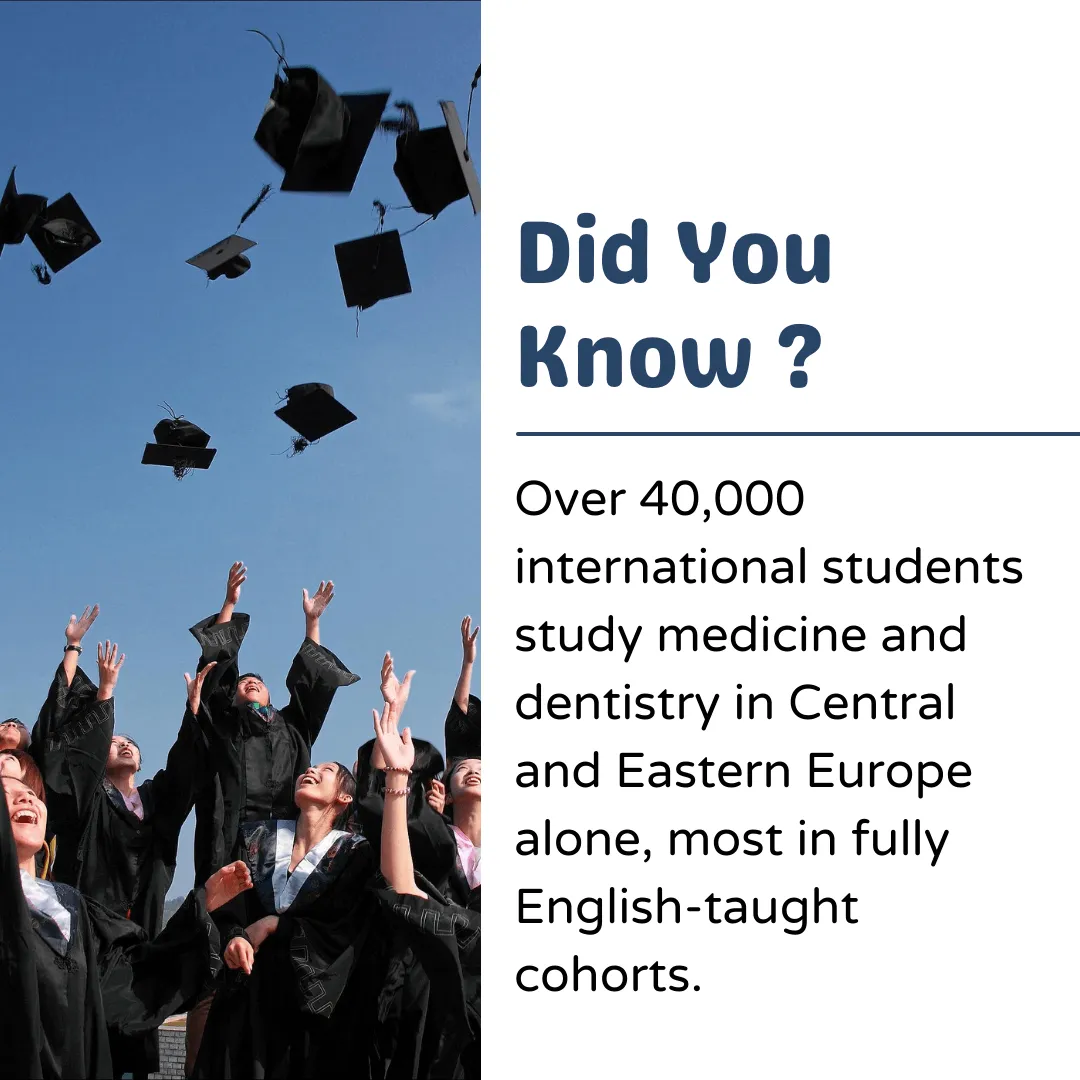
Tuition fees for medical programs in Europe differ significantly by country, university type, and language of instruction. In many Central and Eastern European countries, English-taught general medicine and related health programmes at public universities are commonly priced in a broad band that can be significantly lower than fees in North America or the UK, while some private or Western European institutions charge higher rates.
For EU/EEA citizens, local-language medical programs in Europe can be low-cost or even tuition-free in several countries, though these places are limited and highly competitive.
Across much of Eastern and Southern Europe, overall living costs (housing, food, transport) remain moderate, which keeps total annual expenses for international students comparatively manageable—and this is reflected in MedHead’s country-by-country breakdowns for general medicine.
When comparing medical programs in Europe, students should first decide whether they want to pursue general medicine (MD/MBBS-equivalent) or another healthcare field such as dentistry, veterinary medicine, pharmacy, nursing, or physiotherapy. This choice affects programme length, clinical exposure, licensing requirements, and long-term career pathways.
Another key decision is whether to study in English or in the local language: English-taught medical programs in Europe provide easier academic access for international students but still require learning the local language for clinical communication, while local-language tracks may be cheaper and better integrated into domestic healthcare systems but demand advanced language skills from the outset.

With so many countries, degree types, and entry routes, selecting among medical programs in Europe can be challenging.
MedHead focuses on European general medicine and related health degrees, collecting up-to-date information on tuition fees, admission exams, language requirements, and recognition so you can filter options realistically.