futurembbs logo
+420778891055 info@medhead.no
Search

Global Access to Medicine-Stipendet 2025

Home > Blogs > Global Access to Medicine-Stipendet 2025

Global Access to Medicine-Stipendet 2025

Global Access to Medicine-Stipendet 2025

👤 Admin 📅 12 Jan 2026

You Should Know this If you Want to Study Dentistry Abroad

Stipendoversikt

  • 💰 Verdi: opptil 10 000 USD
  • ⏰ Søknadsfrist: 30. desember 2025
  • 🌍 Åpent for: internasjonale studenter som vil studere medisin eller helsefag i Slovakia

Om stipendet

Tilgjengelige studieprogrammer

  • M.D. Allmennmedisin – Comenius University, Bratislava (6 år)
  • M.D. Odontologi – Comenius University, Bratislava (6 år)
  • Master Farmasi – Comenius University, Bratislava
  • Master Veterinærmedisin – University of Vet. Med. Košice (6 år)

Tilgjengelige studieprogrammer

Viktige datoer

  • Søknadsstart: 24. juni 2025
  • Søknadsfrist: 30. desember 2025
  • Finalister: januar–februar 2026
  • Vinner(e) annonseres: mars 2026
  • Utbetaling: Høstsemesteret 2026

Viktige datoer

Hvorfor søke via MedHead?

Å velge å studere medisin i utlandet er et modig valg. Gjennom dette stipendet, utviklet sammen med Keystone, ønsker vi å støtte deg som tør å satse på en internasjonal utdanning. Send inn søknaden din før 30. desember 2025!

Hvorfor søke via MedHead?

Most countries offer 5-year dental programs after high school. This is a single continuous course combining theoretical studies, preclinical training, and clinical practice. Some countries allow graduate entry with accelerated 4-year programs for students who already hold relevant degrees.

What Are the Costs Involved in Studying Dentistry Abroad?

Costs to consider for studying dentistry abroad include:

  • Tuition fees: These vary between countries and institutions. Europe, for example, offers dental programs ranging roughly from €4,500 to €20,000 per year at English-taught faculties. Some Eastern European countries have even more affordable options.
  • Living expenses: Depending on the country, monthly living costs (housing, food, transport) range from €400 to €1000 or more.
  • Additional costs: This includes student health insurance, books, dental instruments, exam fees, and travel expenses.

Investigate scholarship options or financing to offset costs. Some universities provide financial aid for international students.

How Do I Get Licensed to Practice After Studying Dentistry Abroad?

Licensing to practice dentistry after studying abroad depends on your home country and where you intend to work:

  • European Union: Dental degrees from accredited EU schools typically enjoy automatic recognition across member states under EU directives, facilitating practice mobility.
  • Outside the EU: Countries like the USA, Canada, Australia, and the UK usually require passing local licensing exams (e.g., NBDE in the USA, ORE in Canada, OSCE exams in the UK) even for graduates of foreign dental schools.
  • Country-specific requirements: Always check with your home country’s dental council or licensing authority about recognizing foreign degrees and requirements for additional exams or practical training.

What Are the Advantages of Studying Dentistry in Europe?

Europe is a popular destination for dentistry studies abroad due to:

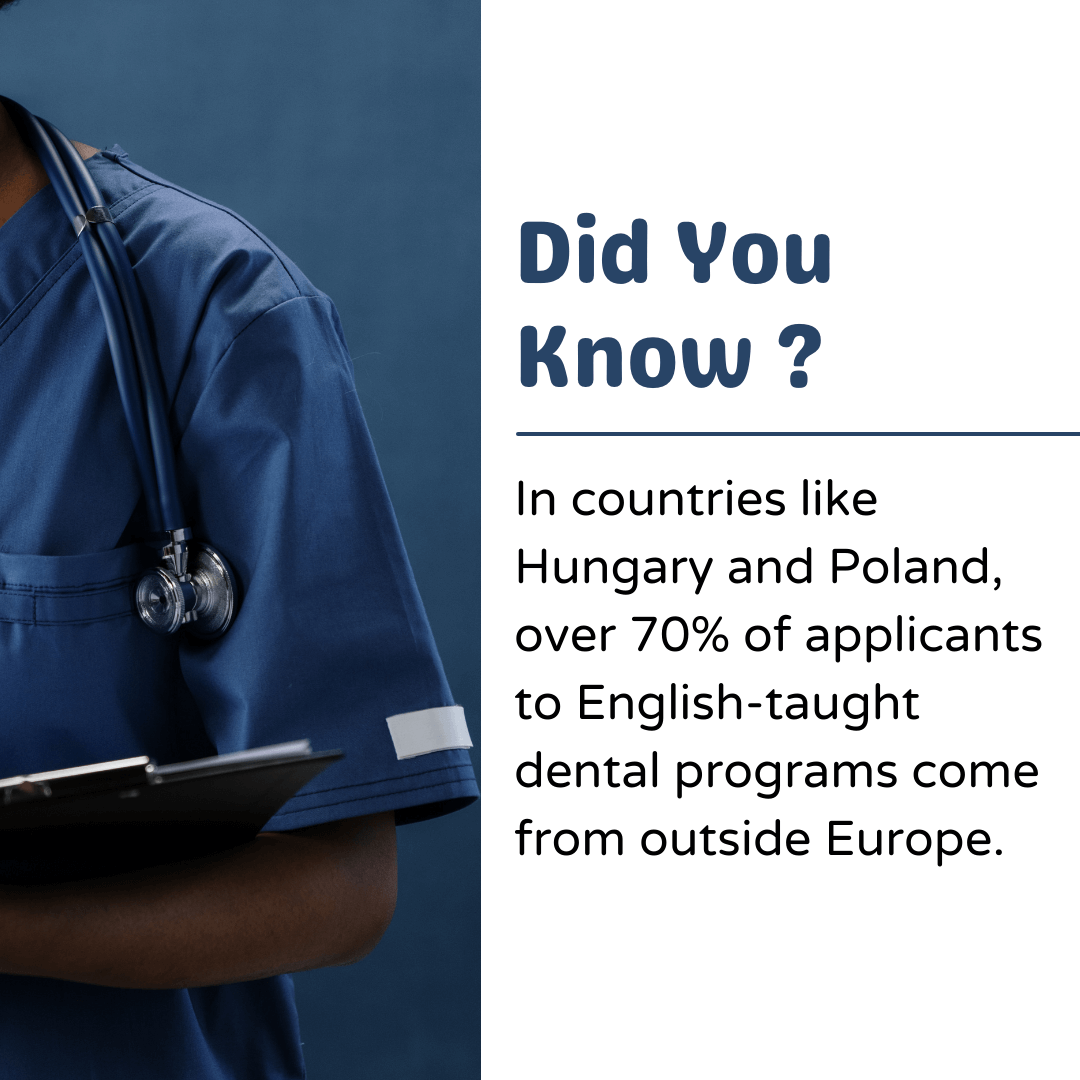
  • Numerous high-quality, English-taught dental programs across countries like Poland, Hungary, Romania, and the Czech Republic.
  • Lower tuition fees and living costs compared to North America and Western Europe.
  • EU-wide recognition of dental degrees, enhancing career mobility.
  • Early clinical exposure from year 3 or 4, providing hands-on experience with patients.

MedHead provides detailed guidance on studying dentistry abroad in Europe with insights on tuition, admissions, and career pathways in the article on dental medicine and dentistry in Europe.
How Do I Choose the Right Dental School Abroad?

Consider the following when choosing where to study dentistry abroad:

  • Accreditation and recognition: Ensure the dental program is accredited and recognised by relevant dental councils internationally.
  • Language of instruction: Confirm if the program is offered in English or if you need proficiency in the local language.
  • Costs and scholarships: Compare tuition, living costs, and availability of financial aid.
  • Clinical training opportunities: Look for schools with strong clinical placements and modern facilities.
  • Admission requirements: Evaluate your eligibility based on academic background and entry exams.
  • Location and lifestyle: Factor in cultural fit, climate, safety, and personal preferences.

Consulting services like MedHead can assist in matching applicants to dental programs abroad suited to their profile and goals.

Conclusion

Studying dentistry abroad opens exciting opportunities for quality education, clinical skills development, and international career mobility. 

However, it requires thorough planning on admission, costs, language proficiency, and licensing pathways. Europe remains a leading hub for English-taught, affordable dental programs with EU-wide degree recognition.

If you have more specific questions about studying dentistry abroad or need personalized guidance, feel free to ask!


×